
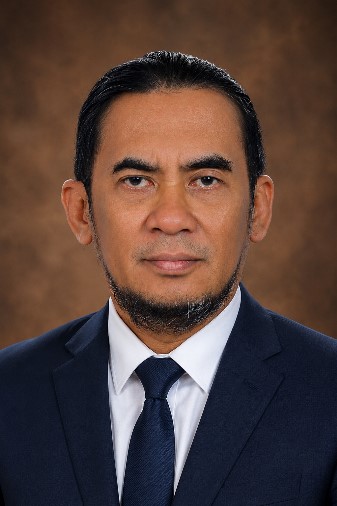
Calon Promotor Program Beasiswa Program Doktoral Padjadjaran Tahun 2026
Nama Lengkap : Prof. Dr. Mohamad Sapari Dwi Hadian, Ir., MT.
E-mail : [email protected]
Bidang Keahlian : Geoheritage
Prodi S3 Calon Mahasiswa: Teknik Geologi
Judul Penelitian yang Ditawarkan:
Variabilitas Iklim Skala Centennial-Millennial di Kepulauan Indonesia: Rekonstruksi Paleoklimat dan Interaksi Laut-Atmosfer di Indo-Pacific Warm Pool
Centennial-to-Millennial-Scale Climate Variability of the Indonesian Archipelago: Paleoclimate Reconstruction and Ocean-Atmosphere Coupling in the Indo-Pacific Warm Pool
Abstrak:
Penelitian ini mengkaji variabilitas iklim pada skala waktu seratusan hingga ribuan tahun (centennial-to-millennial) di wilayah Benua Maritim Indonesia, yang terletak di jantung Indo-Pacific Warm Pool (IPWP) — hamparan air permukaan laut hangat terluas di Bumi, di mana suhu permukaan laut (sea surface temperature/SST) kerap melampaui 28–29°C. Wilayah ini merupakan penggerak utama konveksi atmosfer dan menopang pertukaran panas serta uap air antara laut dan atmosfer dengan intensitas yang sangat tinggi.
Iklim Kepulauan Indonesia dikendalikan oleh interaksi kompleks antara Monsun Indo-Australia, variabilitas El Niño-Southern Oscillation (ENSO), dan Indian Ocean Dipole (IOD). Dari sudut pandang oseanografi, kepulauan ini dilalui oleh Arus Lintas Indonesia (Indonesian Throughflow/ITF), yaitu arus dangkal hingga menengah yang membawa massa air hangat dengan salinitas relatif rendah dari Samudra Pasifik menuju Samudra Hindia. Arus ini memegang peranan penting dalam redistribusi panas antar-samudra serta dalam sirkulasi termohalin global.
Mengingat keterbatasan panjang rekaman instrumental yang tersedia, penelitian ini mengandalkan analisis multi-proksi beresolusi tinggi pada inti sedimen laut (marine sediment cores) untuk merekonstruksi variasi suhu permukaan laut (SST) dan salinitas permukaan laut (sea surface salinity/SSS) di masa lampau sejak Last Glacial Maximum (LGM), dengan penekanan khusus pada periode Holosen. Data baru yang dihasilkan akan memperkaya basis data SENSETROP dan menyempurnakan rekonstruksi paleotermometrik yang telah ada.
Tujuan penelitian ini adalah: (1) merekonstruksi variabilitas iklim pada skala seratusan hingga ribuan tahun di IPWP sejak LGM; (2) mengkarakterisasi interaksi antara Monsun Indo-Australia, ENSO, dan IOD pada skala waktu seratusan hingga ribuan tahun; (3) mengidentifikasi potensi sinyal prekursor (precursor signals) dari perubahan iklim mendadak (abrupt climate change); serta (4) membandingkan hasil temuan berbasis proksi dengan simulasi transien (transient simulations) dari model iklim IPSL.
Metodologi penelitian mencakup analisis isotop stabil (δ¹³C dan δ¹⁸O) pada foraminifera planktonik menggunakan IR mass spectrometer di LSCE, pengukuran rasio Mg/Ca dengan ICP-MS sebagai proksi paleotermometrik, serta analisis sedimentologi dan mikropaleontologi yang dilaksanakan di Departemen Teknik Geologi, Universitas Padjadjaran.
Luaran yang ditargetkan berupa empat artikel yang dipublikasikan pada jurnal internasional bereputasi terindeks Scopus/WoS Q1–Q2, masing-masing satu artikel per tahun, beriringan dengan capaian tahapan studi doktoral mulai dari Seminar Usulan Riset (Initial Research Seminar) hingga Sidang Promosi Doktor (Doctoral Promotion Examination). Tingkat Kesiapterapan Teknologi (Technology Readiness Level/TRL) yang diusulkan adalah TRL 2–4.
KATA KUNCI: ENSO, Indo-Pacific Warm Pool, Arus Lintas Indonesia, Paleoklimatologi, Paleoseanografi.
Abstract:
This research investigates centennial-to-millennial-scale climate variability across the Indonesian Maritime Continent, located at the heart of the Indo-Pacific Warm Pool (IPWP) the largest expanse of warm surface ocean water on Earth, where sea surface temperature (SST) frequently exceeds 28–29°C. This region is the primary driver of atmospheric convection and sustains exceptionally intense ocean-atmosphere heat and moisture exchange.
The climate of the Indonesian Archipelago is governed by the complex interplay of the Indo-Australian Monsoon, El Niño-Southern Oscillation (ENSO) variability, and the Indian Ocean Dipole (IOD). From an oceanographic perspective, the archipelago is traversed by the Indonesian Throughflow (ITF), a shallow-to-intermediate current that transports warm, relatively fresh water from the Pacific Ocean into the Indian Ocean, playing a crucial role in inter-ocean heat redistribution and the global thermohaline circulation.
Given the limited length of the available instrumental record, this research relies on high-resolution multi-proxy analysis of marine sediment cores to reconstruct past variations in sea surface temperature (SST) and sea surface salinity (SSS) since the Last Glacial Maximum (LGM), with particular emphasis on the Holocene. The new data generated will expand the SENSETROP database and refine existing paleothermometric reconstructions.
The research objectives are: (1) to reconstruct centennial-to-millennial-scale climate variability in the IPWP since the LGM; (2) to characterise the interactions among the Indo-Australian Monsoon, ENSO, and IOD on centennial-to-millennial timescales; (3) to identify potential precursor signals of abrupt climate change; and (4) to compare proxy-based findings with transient simulations of the IPSL climate model.
The methodology includes stable isotope analysis (δ¹³C and δ¹⁸O) of planktonic foraminifera using an IR mass spectrometer at LSCE, Mg/Ca ratio measurements using ICP-MS as a paleothermometric proxy, and sedimentological and micropaleontological analyses undertaken at the Department of Geological Engineering, Universitas Padjadjaran.
The targeted outputs are four articles published in reputable international journals indexed in Scopus/WoS Q1–Q2, one per year, alongside doctoral study milestones from the Initial Research Seminar to the Doctoral Promotion Examination. The proposed Technology Readiness Level (TRL) is TRL 2–4.
KEYWORDS: ENSO, Indo-Pacific Warm Pool, Indonesian Throughflow, Paleoclimatology, Paleoceanography.