
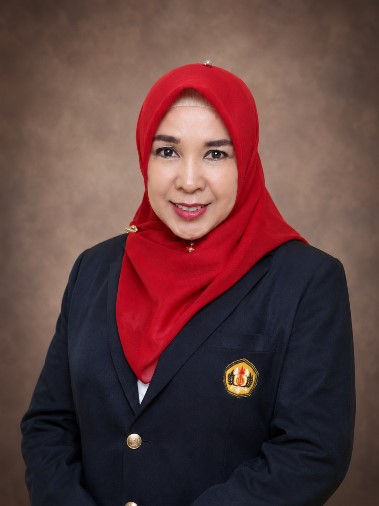
Calon Promotor Program Beasiswa Program Doktoral Padjadjaran Tahun 2026
Nama Lengkap : Dr. Eleonora Agustine, S.Si., MT.
E-mail : [email protected]
Bidang Keahlian : Geofisika ekolorasi sumber daya alam, energi dan lingkungan
Prodi S3 Calon Mahasiswa: Ilmu Lingkungan
Judul Penelitian yang Ditawarkan:
Unlocking Rare Earth Elements di Samarinda, Kalimantan Timur: Penyelidikan Raw Material melalui Integrasi Geofisika Terpadu dan Analisis Geokimia untuk Keberlanjutan Mineral Kritis
Unlocking Rare Earth Elements in Samarinda, East Kalimantan: A Raw Material Investigation via Integrated Geophysics and Geochemical Analysis for Critical Mineral Sustainability
Abstrak:
Fenomena geologi munculnya material lumpur dari bawah permukaan bumi disebut mud volcano, diduga kaya akan kandungan logam berat dan logam tanah jarang. Logam tanah jarang (LTJ) adalah bahan baku penting dimanfaatkan dalam teknologi modern dan industri strategis. Hasil pengolahannya menghasilkan energi bersih dan mengurangi emisi karbon. Fenomena tersebut muncul di beberapa lokasi Samarinda menjadi objek penting untuk diteliti potensi kandungan manfaat dalam material tersebut. Tujuannya memberikan informasi bawah permukaan dan memetakan sebaran mineral serta batuan pembawanya berdasarkan sebaran nilai resistivitas dan kompilasi data geokimia. Data studi geofisika terpadu dan geokimia membantu mengetahui cadangannya guna mendukung akselerasi industri produksi material maju dan energi bersih di Indonesia. Metode geokimia digunakan untuk mengetahui komposisi unsur dan mineral (LTJ) terdiri dari uji XRF, XRD, ICP, dan SEM-EDS. Hasil pengujian dilakukan proses pengolahan dan analisis data. Analisis geokimia menunjukkan potensi LTJ di mud volcano tersebut. Informasi struktur bawah permukaan serta sebaran LTJ/batuan pembawanya maka diperlukan metode geofisika yaitu metode resistivitas DC dan TDEM.
Berdasarkan perpaduan kedua metode pada riset diharapkan akan diperoleh infomasi wilayah mud volcano berpotensi LTJ secara komprehensif. Target luaran penelitian pada tahun I adalah 1 artikel jurnal terindeks Sinta (Sinta 1). Target luaran tahun kedua adalah publikasi Q3, da pada tahun ketiga adalah publikasi Q2. TKT penelitian adalah TKT 3 berupa hasil pemetaan distribusi potensi kandungan LTJ dan rekomendasi terkait pengelolaan LTJ. Kebaruan penelitian adalah eksplorasi LTJ wilayah mud volcano di Samarinda, belum banyak diekplorasi dan dimanfaatkan. Sehingga kajian kedua metode dapat dilanjutkan menuju pemanfaatanya melalui exploitasi LTJ.
Abstract:
The geological phenomenon involving the extrusion of mud from beneath the Earth’s surface is known as a mud volcano, which is hypothesized to be enriched with heavy metals and rare earth elements (REEs). REEs serve as critical raw materials utilized in modern technology and strategic industries, as their processing facilitates clean energy production and carbon emission reduction. This phenomenon, observed at several locations in Samarinda, presents a significant research object for evaluating the potential benefits inherent in the material.
The objective of this study is to provide subsurface information and map the distribution of minerals and their host rocks based on resistivity values and compiled geochemical data. Integrated geophysical and geochemical studies are employed to estimate reserves, thereby supporting the acceleration of advanced material production and clean energy industries in Indonesia. The geochemical methods used to determine elemental and mineral compositions of REEs include XRF, XRD, ICP, and SEM-EDS analysis. Subsequent to testing, data processing and analysis are conducted; preliminary geochemical analyses indicate REE potential within these mud volcanoes.
To characterize the subsurface structure and the distribution of REEs or their host rocks, geophysical methods—specifically DC resistivity and Time-Domain Electromagnetic (TDEM)—are required. By integrating these two methods, this research expects to obtain comprehensive information regarding REE-potential zones within mud volcano areas. The research output targets are as follows: a Sinta 1 indexed journal article in Year I, a Q3 publication in Year II, and a Q2 publication in Year III. The Technology Readiness Level (TRL) of this research is TRL 3, resulting in distribution maps of potential REE content and management recommendations. The originality of this study lies in the exploration of REEs in the mud volcano regions of Samarinda, an area currently under-explored and under-utilized. Consequently, the findings from these dual methods can facilitate further utilization through REE exploitation.