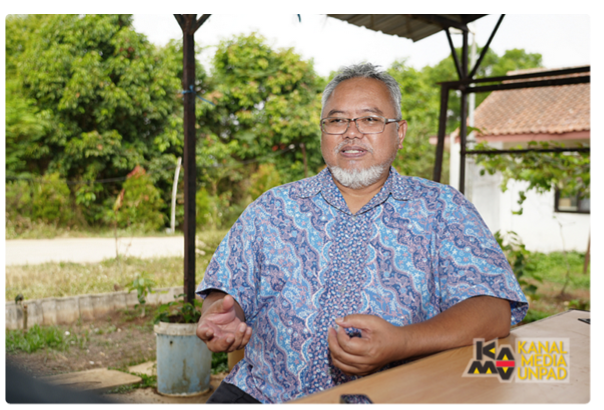
Waste is a serious problem in every region in Indonesia. Ideally, waste should not end up piling up in landfills that have the potential to damage the environment and cause various problems. Waste management and processing are efforts that need to be done. Universitas Padjadjaran itself is committed to not contributing to environmental damage through waste. Since the mid-1990s, Unpad has been carrying out waste management activities independently. This is also an implementation of Unpad’s Main Scientific Pattern “Developing Noble Law and the Environment in National Development (Bina Mulia Hukum dan Lingkungan dalam Pembangunan Nasional)”. Head of the Unpad Center for Safety, Security, and Environmental Order, Dr. Teguh Husodo, M.Sc., explained that waste on the Unpad campus came from three sectors: offices and classes, canteens, and nature. There are two types of waste produced: liquid and solid waste. For solid waste, the operation of the Unpad Jatinangor campus produces an average of 3-5 tons of waste per day. Of that amount, around 60-70 percent is organic waste originating from litter or dirt from dry leaves and twigs, or in other words from natural waste. Furthermore, 30-40 percent comes from inorganic waste.
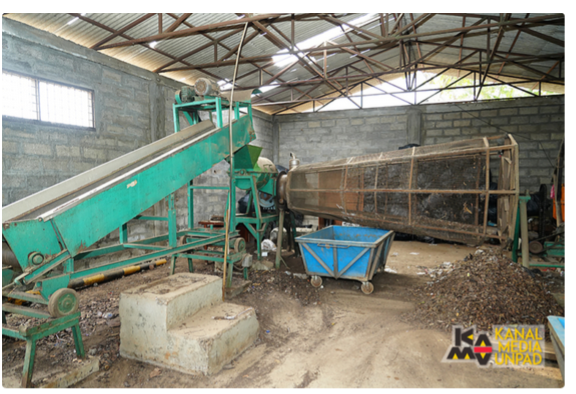
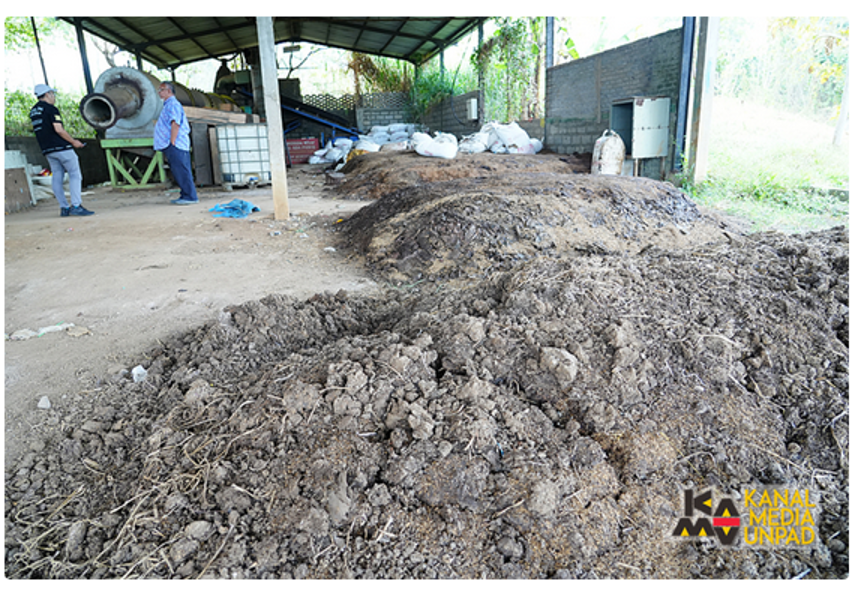
Teguh divides this inorganic waste into several categories. The first is waste that still has value such as plastic bottles of bottled water, leftover food boxes, and paper left over from office activities. The second category is waste that has no value or residue, such as plastic bags, styrofoam, glass shards, and construction waste. Apart from that, other waste produced is food waste and B3 waste such as batteries, lamps, and scrap electronic devices, the amount of which does not exceed five percent. “In principle, for organic and inorganic waste, Unpad has managed and processed it independently,” said Teguh when interviewed at the Unpad Reuse-Reduce-Recycle Waste Management Site (TPS3R), Jatinangor, Thursday (7/9/2023). Processed into Fertilizer Compost and liquid fertilizer produced from the waste fermentation process on the Unpad campus. (Photo: Dadan Triawan)* Teguh said that there were several waste treatment processes carried out at the Unpad TPS3R. For organic waste, especially from litter, it is processed using aerobic and anaerobic methods. In the aerobic process, the litter is fermented by dumping. Some of the litter that has undergone the aerobic process is taken to be processed into the anaerobic process. In this process, the litter is combined with the bokashi system, or additional elements are added as nutrients from the organic waste to be fermented. The anaerobic fermentation process combined with the bokashi method. (Photo: Dadan Triawan)* “The additional elements given come from cow and chicken manure from the research pen on the Unpad campus, mixed and then fermented for approximately two months. After that, it is mixed and filtered to select which is fine and coarse to then be packaged and become organic fertilizer,” said Teguh. This organic fertilizer is then used by students for the fertilization process in the laboratory or fertilizing the gardens in the Jatinangor campus area. Teguh admitted that currently, fertilizer production was still limited so that the stock was still limited for use on campus. “We once overproduced, then offered it to flower traders around Jatinangor. They said the quality of the fertilizer was good,” said Teguh. Because it is limited, not all litter waste goes to TPS3R. Waste that does not go in is then “dumped” to several areas of campus, especially in green areas. Teguh ensured that this activity was not in order to litter, but it was part of the aerobic fermentation process. “We throw it there so that the aerobic process runs there,” said Teguh. For food waste, most of it is taken as maggot feed managed by Unpad students. The rest is mixed in the bokashi process.
Meanwhile, inorganic waste in the form of plastics also goes to TPS3R to be shredded. The shredded plastics are collected and were once purchased by plastic pellet entrepreneurs to be used as materials for new plastic products. Over time, said Teguh, many Unpad denizens, especially janitors, understand that some plastic waste has economic value. “Many of them become plastic bottle collectors, so that there is almost no valuable waste coming to TPS3R Unpad at the moment,” he said. For B3 waste, Unpad does not have a permit to process it. Therefore, Unpad has partnered with a certified B3 waste treatment company. “We dispose of B3 waste using the services of a third party,” said Teguh. Liquid Waste Processing, In addition to solid waste, Unpad also produces liquid waste. This liquid waste is divided into two: waste from campus operations and laboratory waste. Operational waste from campus activities, offices, and dormitories that exits through the septic tank then enters the biofilter. Water that does not enter the biofilter then exits and is directly absorbed into the ground.
Meanwhile, the sediment is sucked up to be further processed by a third party service. Meanwhile, laboratory liquid waste enters the wastewater treatment plant (WWTP). Teguh explained that the Unpad Jatinangor campus had five WWTPs to accommodate laboratory waste. The wastewater from the five WWTPs then enters and is processed into the last WWTP at Ekoriparian Leuwi Padjadjaran before finally exiting into the arboretum lake. “In essence, there is no waste that exits. Unpad almost implements a closed system for waste management. Only B3 waste and liquid waste sediment are disposed of outside the campus because Unpad does not yet have a permit to process the waste. We work with a certified third party to transport it,” explained Teguh. It is quite a challenge although the waste management process has been running for more than two decades, Teguh feels that the waste problem must continue to be resolved. The approach to resolving it at the source must be improved. Various policies to reduce waste have been implemented. However, Teguh encourages these policies to be further strengthened. One of the challenges is how to invite the campus to care more about cleanliness. “How to invite the campus community to care, I admit this is a difficult process to do. Therefore, we are trying to improve the socialization of waste treatment into various programs, one of which is the insertion into the OKK program for new students,” he concluded.*