
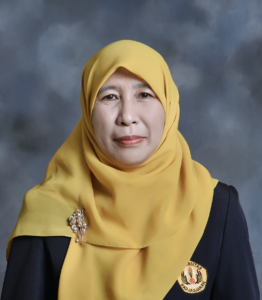
Calon Promotor Program Padjadjaran Excellence Fastrack Scholarship Tahun 2024
Nama Lengkap : Prof. Dr. Tri Mayanti, M.Si.
E-mail : [email protected]
Bidang Keahlian : Kimia Organik Bahan Alam
Prodi S2 Calon Mahasiswa: Kimia
Prodi S3 Calon Mahasiswa: Kimia
Judul Penelitian yang Ditawarkan:
EKSPLORASI BIOAKTIVITAS TANAMAN PISITAN (Lansium domesticum Corr cv piedjietan)
EXPLORATION OF THE BIOACTIVITY OF PISITAN (Lansium domesticum Corr cv piedjietan)
Abstrak:
Indonesia merupakan salah satu dari tujuh negara “megadiversity” yang kaya akan keanekaragaman hayati, yang merupakan reservoir bagi bahan-bahan kimia yang potensial sebagai obat, bahan agrokimia, atau bahan baku industri. Dari penelitian berkelanjutan kami untuk menemukan senyawa aktif baru dari Lansium domesticum, telah diperoleh beberapa senyawa baru yang menunjukkan berbagai bioaktivitas yang menarik untuk dikaji lebih lanjut. Bioaktivitas yang telah dilaporkan dari ekstrak maupun senyawa hasil isolasi dari spesies ini adalah sebagai antifeedant, antimicrobial, antimalaria, antikanker, antioksidan, insektisidal, dan antimutagenis. Tiga senyawa tetranortriterpenoid baru yang diberi nama kokosanolid A, B dan D telah berhasil diisolasi dari kultivar kokosan dan diuji aktivitasnya terhadap sel kanker payudara MCF-7. Lima triterpen onoceranoid, yaitu 8,14-secogammacera-7,14-dien-3,21-dion, 8,14-secogammacera-7,14(27)-dien-3,21-dion, 8,14-secogammacera-7-en-14-hidroksi-3,21-dion, 3,14,21-trihidroksi-8,14-secogammacera-7-en dan 3-hidroksi-8,14-sekogamasera-7,14-dien-21-on juga telah diisolasi dari bagian kulit batang dan kulit buah kokosan. Sebuah senyawa sikloartanoid baru, 9,19-siklolanost-24-en-3-on, 21,23 epoksi-21,22-dihidroksi (21R, 22S, 23S) juga telah diperoleh dari daun kokosan. Beberapa senyawa hasil isolasi telah diuji aktivitasnya terhadap sel kanker payudara MCF-7, dua diantaranya menunjukkan aktivitas yang sangat baik (kokosanolid A dengan IC50 8,62 ppm dan 9,19-siklolanost-24-en-3-on, 21,23 epoksi-21,22-dihidroksi (21R, 22S, 23S) dengan IC50 1,13 ppm). Peluang untuk menggali potensi senyawa-senyawa aktif lain dari tumbuhan Lansium masih terbuka luas mengingat masih terbatasnya laporan mengenai keberadaan senyawa-senyawa aktif terutama yang berasal dari pisitan. Penelitian ini bertujuan untuk memperoleh senyawa-senyawa aktif dari tumbuhan pisitan (Lansium domesticum Corr cv piedjietan. Senyawa-senyawa hasil isolasi akan diuji aktivitas antioksidan dan sitotoksiknya terhadap berbagai sel kanker secara in vitro dan in silico. Pada tahun ke-1 dan ke-2 akan dilakukan isolasi dan penentuan struktur metabolit sekunder dari bagian kulit buah dan biji pisitan (Lansium domesticum Corr cv piedjietan) melalui metode isolasi, pemurnian dan elusidasi struktur menggunakan berbagai spektroskopi (UV, IR, NMR dan MS). Senyawa-senyawa hasil isolasi akan diuji aktivitas antioksidan dan sitotoksiknya terhadap berbagai sel kanker secara in vitro (pada tahun ke-3) dan in silico (pada tahun ke-4). Uji antioksidan secara in vitro dilakukan dengan metode DPPH dan SOD-non enzimatik, uji sitotoksik secara in vitro dilakukan dengan MTT assay. Uji in silico dilakukan melalui studi interaksi penambatan dengan berbagai protein target. Luaran yang ditargetkan selama penelitian adalah empat atikel (satu artikel per tahun) pada jurnal internasional terindeks Scopus minimal Q3. Keberhasilan penelitian dalam memperoleh informasi mengenai sifat farmakologi dan toksikologi senyawa aktif antioksidan dan sitotoksik terhadap berberapa sel kanker dari kulit buah dan biji L. domesticum cv piedjietan bermanfaat sebagai informasi awal yang penting dalam penemuan obat herbal terstandar untuk kanker payudara yang dapat dikembangkan lebih lanjut untuk membuat sediaan fitofarmaka guna melayani kesehatan masyarakat.
Abstract:
Indonesia is one of the seven “megadiverse” countries rich in biodiversity, which serves as a reservoir for potential chemical substances as drugs, agrochemicals, or industrial raw materials. From our ongoing research to discover new active compounds from Lansium domesticum, several new compounds have been obtained showing various interesting bioactivities for further study. Reported bioactivities from extracts and isolated compounds from this species include antifeedant, antimicrobial, antimalarial, anticancer, antioxidant, insecticidal, and antimutagenic properties. Three new tetranortriterpenoid compounds named kokosanolides A, B, and D have been successfully isolated from the kokosan cultivar and tested for their activity against MCF-7 breast cancer cells. Five onoceranoid triterpenes, namely 8,14-secogammacera-7,14-dien-3,21-dione, 8,14-secogammacera-7,14(27)-dien-3,21-dione, 8,14-secogammacera-7-en-14-hydroxy-3,21-dione, 3,14,21-trihydroxy-8,14-secogammacera-7-ene, and 3-hydroxy-8,14-secogammacera-7,14-dien-21-one, have also been isolated from the stem bark and fruit peel of kokosan. A new cycloartanoid compound, 9,19-cyclolanost-24-en-3-one, 21,23-epoxy-21,22-dihydroxy (21R, 22S, 23S), has also been obtained from kokosan leaves. Several isolated compounds have been tested for their activity against MCF-7 breast cancer cells, two of which showed very good activity (kokosanolide A with IC50 8.62 ppm and 9,19-cyclolanost-24-en-3-one, 21,23-epoxy-21,22-dihydroxy (21R, 22S, 23S) with IC50 1.13 ppm). The opportunity to explore the potential of other active compounds from Lansium plants is still wide open, given the limited reports on the presence of active compounds, especially those derived from pisitan. This research aims to obtain active compounds from pisitan plants (Lansium domesticum Corr cv piedjietan). The isolated compounds will be tested for their antioxidant and cytotoxic activities against various cancer cells in vitro and in silico. In the first and second years, isolation and determination of the secondary metabolite structures from the fruit peel and seeds of pisitan (Lansium domesticum Corr cv piedjietan) will be conducted using isolation methods, purification, and structure elucidation using various spectroscopic techniques (UV, IR, NMR, and MS). The isolated compounds will be tested for their antioxidant and cytotoxic activities against various cancer cells in vitro (in the third year) and in silico (in the fourth year). In vitro antioxidant assays will be performed using the DPPH and non-enzymatic SOD methods, while in vitro cytotoxic assays will be performed using the MTT assay. In silico testing will be carried out through docking interaction studies with various target proteins. The targeted outputs during the research are four articles (one article per year) in international journals indexed in Scopus at least Q3. The success of the research in obtaining information about the pharmacological and toxicological properties of active antioxidant and cytotoxic compounds against several cancer cells from the fruit peel and seeds of L. domesticum cv piedjietan is beneficial as important preliminary information in the discovery of standardized herbal medicines for breast cancer that can be further developed to produce phytopharmaceutical preparations to serve public health.