
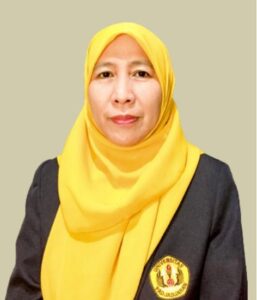
Nama Lengkap : Prof. Dr. Tri Mayanti, M. Si.
E-mail : [email protected]
Bidang Keahlian : Kimia Organik Bahan Alam
Prodi S2 Calon Mahasiswa : Ilmu Kimia
Prodi S3 Calon Mahasiswa : Ilmu Kimia
Judul Penelitian yang Ditawarkan:
POTENSI SENYAWA BIOAKTIF DARI TUMBUHAN DUKU (Lansium domesticum Corr)
POTENTIAL OF BIOACTIVE COMPOUNDS FROM DUKU PLANT (Lansium domesticum Corr)
Abstrak:
Tumbuhan Lansium domesticum Corr. adalah salah satu jenis tumbuhan dari famili Meliaceae yang memiliki tiga kultivar khas Indonesia, yaitu duku, kokosan, dan pisitan. Dari penelitian berkelanjutan kami untuk menemukan senyawa aktif baru dari kultivar kokosan, telah diperoleh beberapa senyawa baru yang menunjukkan berbagai bioaktivitas yang menarik untuk dikaji lebih lanjut. Bioaktivitas yang telah dilaporkan dari ekstrak maupun senyawa hasil isolasi dari spesies ini adalah sebagai antifeedant, antimicrobial, antimalaria, antikanker, antioksidan, insektisidal, dan antimutagenis. Tiga senyawa tetranortriterpenoid baru yang diberi nama kokosanolid A, B dan D telah berhasil diisolasi dari kultivar kokosan dan diuji aktivitasnya terhadap sel kanker payudara MCF-7. Lima triterpen onoceranoid, yaitu 8,14-secogammacera-7,14-dien-3,21-dion, 8,14-secogammacera-7,14(27)-dien-3,21-dion, 8,14-secogammacera-7-en-14-hidroksi-3,21-dion, 3,14,21-trihidroksi-8,14-secogammacera-7-en dan 3-hidroksi-8,14-sekogamasera-7,14-dien-21-on juga telah diisolasi dari bagian kulit batang dan kulit buah kokosan. Empat senyawa pertama menunjukkan aktivitas toksik terhadap larva nyamuk Aedes aegypti. Sebuah senyawa sikloartanoid baru, 9,19-siklolanost-24-en-3-on, 21,23 epoksi-21,22-dihidroksi (21R, 22S, 23S) juga telah diperoleh dari daun kokosan. Beberapa senyawa hasil isolasi telah diuji aktivitasnya terhadap sel kanker payudara MCF-7, dua diantaranya menunjukkan aktivitas yang sangat baik (kokosanolid A dengan IC50 8,62 ppm dan 9,19-siklolanost-24-en-3-on, 21,23 epoksi-21,22-dihidroksi (21R, 22S, 23S) dengan IC50 1,13 ppm). Peluang untuk menggali potensi senyawa-senyawa aktif lain dari tumbuhan Lansium masih terbuka luas mengingat masih terbatasnya laporan mengenai keberadaan senyawa-senyawa aktif terutama yang berasal dari kultivar kokosan dan pisitan. Penelitian ini bertujuan untuk memperoleh senyawa-senyawa aktif dari tumbuh Lansium domesticum Corr kultivar kokosan dan pisitan. Senyawa-senyawa hasil isolasi akan diuji aktivitas antioksidan dan sitotoksiknya terhadap berbagai sel kanker secara in vitro dan in silico. Pada tahun ke-1 dan ke-2 akan dilakukan isolasi dan penentuan struktur metabolit sekunder dari bagian kulit buah/kulit batang Lansium domesticum Corr kultivar kokosan dan pisitan melalui metode isolasi, pemurnian dan elusidasi struktur menggunakan berbagai spektroskopi (UV, IR, NMR dan MS). Senyawa-senyawa hasil isolasi akan diuji aktivitas antioksidan dan sitotoksiknya terhadap berbagai sel kanker secara in vitro (pada tahun ke-3) dan in vivo (pada tahun ke-4). Uji antioksidan secara in vitro dilakukan dengan metode DPPH dan SOD-non enzimatik, uji sitotoksik secara in vitro dilakukan dengan MTT assay. Uji in silico dilakukan melalui studi interaksi penambatan dengan berbagai protein target. Luaran yang ditargetkan selama penelitian adalah empat atikel (satu artikel per tahun) pada jurnal internasional terindeks Scopus minimal Q3. Penelitian ini merupakan riset dasar yang akan menghasilkan hipotesis mengenai mekanisme kerja terhadap aktivitas antioksidan dan sitotoksik pada beberapa sel kanker sehingga kesiapan teknologi yang akan dicapai adalah level 2 dengan persiapan ke arah lanjutan untuk mengidentifikasi dan memprediksi karakteristik/sifat dan kapasitas unjuk kerja senyawa aktif dalam model riset in vivo dan in vitro (level 3). Keberhasilan penelitian dalam memperoleh informasi mengenai sifat farmakologi dan toksikologi senyawa aktif antioksidan dan sitotoksik terhadap sel kanker payudara MCF-7 dari kulit buah L. domesticum cv kokossan bermanfaat sebagai informasi awal yang penting dalam penemuan obat herbal terstandar untuk kanker payudara yang dapat dikembangkan lebih lanjut untuk membuat sediaan fitofarmaka guna melayani kesehatan masyarakat.
Abstract :
Lansium domesticum Corr. is a type of plant from the Meliaceae family which has three distinctly Indonesian cultivars, namely duku, kokosan, and pisitan. From our ongoing research to find new active compounds from cocoa cultivars, several new compounds have been obtained which exhibit various interesting bioactivities for further study. Bioactivity that has been reported from extracts and compounds isolated from this species is as antifeedant, antimicrobial, antimalarial, anticancer, antioxidant, insecticidal, and antimutagenic. Three new tetranortriterpenoid compounds named kokosanolide A, B and D have been isolated from cocoa cultivars and tested for their activity against MCF-7 breast cancer cells. Five onoceranoid triterpenes, namely 8,14-secogammacera-7,14-dien-3,21-dion, 8,3-hydroxy-8,14-sekogamasera-7,14-dien-21-one have also been isolated from the bark and bark of kokosan. The first four compounds showed toxic activity against Aedes aegypti mosquito larvae. A new cycloartanoid compound, 9,19-cyclolanost-24-en-3-one, 21,23 epoxy-21,22-dihydroxy (21R, 22S, 23S) has also been obtained from kokosan leaves. Several isolated compounds have been tested for their activity against MCF-7 breast cancer cells, two of which showed very good activity (kokosanolide A with an IC50 of 8.62 ppm and 9.19-cyclolanost-24-en-3-one, 21.23 epoxy -21,22-dihydroxy (21R, 22S, 23S) with an IC50 of 1.13 ppm). Opportunities to explore the potential of other active compounds from the Lansium plant are still wide open given the limited reports on the existence of active compounds, especially those from kokosan and pisitan cultivars. This study aims to obtain active compounds from growing Lansium domesticum Corr cv kokosan and pisitan cultivars. The isolated compounds will be tested for their antioxidant and cytotoxic activity against various cancer cells in vitro and in silico. In the 1st and 2nd years, isolation and determination of the structure of secondary metabolites will be carried out from the fruit peel/bark of Lansium domesticum Corr cv kokosan and pisitan cultivars through isolation, purification and structure elucidation methods using various spectroscopy (UV, IR, NMR and MS). The isolated compounds will be tested for their antioxidant and cytotoxic activity against various cancer cells in vitro (in the 3rd year) and in vivo (in the 4th year). Antioxidant test in vitro was carried out using the DPPH and SOD-non-enzymatic methods, In vitro cytotoxic test was performed by MTT assay. The in silico test was carried out through binding interaction studies with various target proteins. The targeted output during the research was four articles (one article per year) in Scopus indexed international journals at least Q3. This research is basic research that will produce a hypothesis regarding the mechanism of action of antioxidant and cytotoxic activity in several cancer cells so that the technological readiness to be achieved is level 2 with further preparation to identify and predict the characteristics/properties and performance capacity of active compounds as the model for in vivo and in vitro research (level 3).The success of research in obtaining information on the pharmacological and toxicological properties of antioxidant and cytotoxic active compounds against MCF-7 breast cancer cells from L. domesticum cv kokossan is useful as important initial information in the discovery of standardized herbal medicines for breast cancer which can be further developed for making phytopharmaca preparations to serve public health.